
Arbor Mesh Internet
Hannah Paused All Marketing for 60 Days. Here's Why.
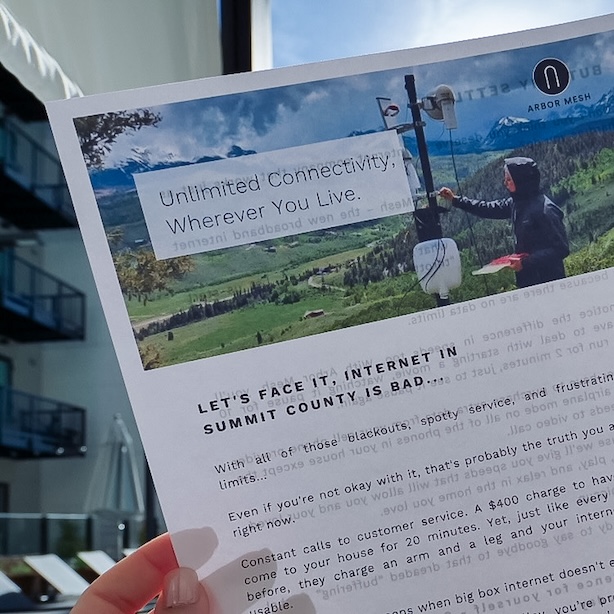
Power outages and unreliable tower leases were dropping the Arbor Mesh network roughly once a week during Colorado winters. When the main connection went down, failover had to be switched manually from the command line - and once an entire network's worth of traffic was routed through a single T-mobile backup, bandwidth clogged.
A customer hosting friends for a Denver Nuggets game would watch the stream pixelate, cut in and out, and eventually pick up the phone.
Arbor Mesh had positioned itself as the reliable local alternative. The competitors already had one-star reviews for exactly this problem. With a small review history, even one or two bad Google reviews would have been devastating.
The call: no marketing until the network ran 60 consecutive days without a single outage.
The team added redundant sites, increased capacity, trained local emergency techs, and replaced an unreliable tower lease with a more professional provider. They built three new tower sites through direct property owner relationships.
They passed 60 days. Then 90. Then 180. Over a year with zero outages.
Then - and only then - Hannah turned marketing back on.
The Setup
During COVID, an aerospace engineer from Texas taught himself wireless networking, used his Bitcoin winnings to fund the build, and started deploying broadband through the Colorado Rocky Mountains.
By the time Hannah came in, he'd won a grant from the Colorado Broadband Board, built about half the network, and had 168 households left to serve. His strategy was knocking on doors.
The problem with knocking on doors:
The company's project manager was driving three to four hours a day through mountain roads to do it - while also handling installs, grant reporting, and tech support. At $1,100 allocated per household and most of it eaten by driving time, the cost model was bleeding out.
Worse, the homeowners were hardly ever there. Retired, 50 to 70, visiting during ski season. $2M+ timber homes sitting empty for months. And the existing providers had one-star reviews and constant outages - so nobody in these mountains trusted an ISP showing up unannounced.
The grant was strictly for construction. No marketing budget existed.
Hannah did the work anyway.
She started doing brand and marketing on her own time, unpaid. Then transitioned into a PM role to find strategic openings - ways to unlock marketing funding and build the business relationships that would make Arbor Mesh viable long-term.
Finding the Real Pain Points
The first thing Hannah looked at was copy. Arbor Mesh's website. Competitor sites. Customer reviews. Not the pain points the industry assumed - the ones people were actually living with.
Wealthy homeowners with beautiful properties and the budget to match, stuck paying for terrible service from providers who never show up. Businesses charging whatever they want because it's a resort town and they can.
That's who Hannah was writing for.
Someone making a quick decision before ski season who needs reliable streaming, stable video calls, connected security systems, and bandwidth for a full house of guests.
$15 Per Customer: The Direct Mail Play
Hannah tested Google Ads, Yelp, Nextdoor, and local SEO. All helped with inbound.
Direct mail outperformed everything.
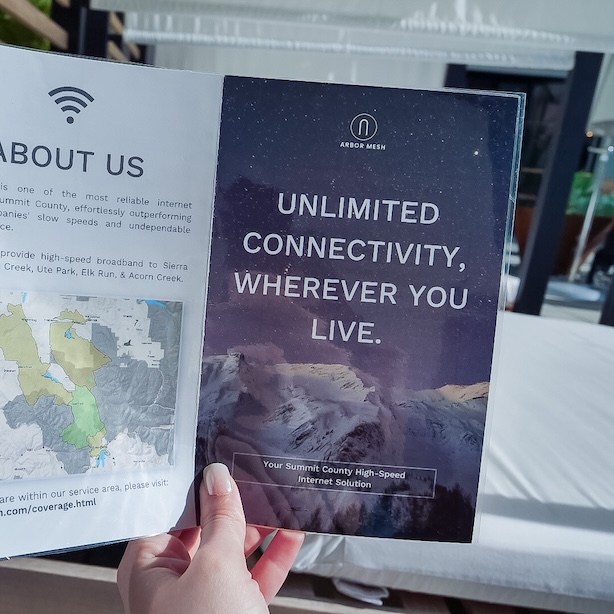
It made sense. These homeowners had been receiving and responding to physical mail for decades. Long-form letters modeled on 1970s-style ads were a natural fit for the demographic.
Designing something with actual weight to it.
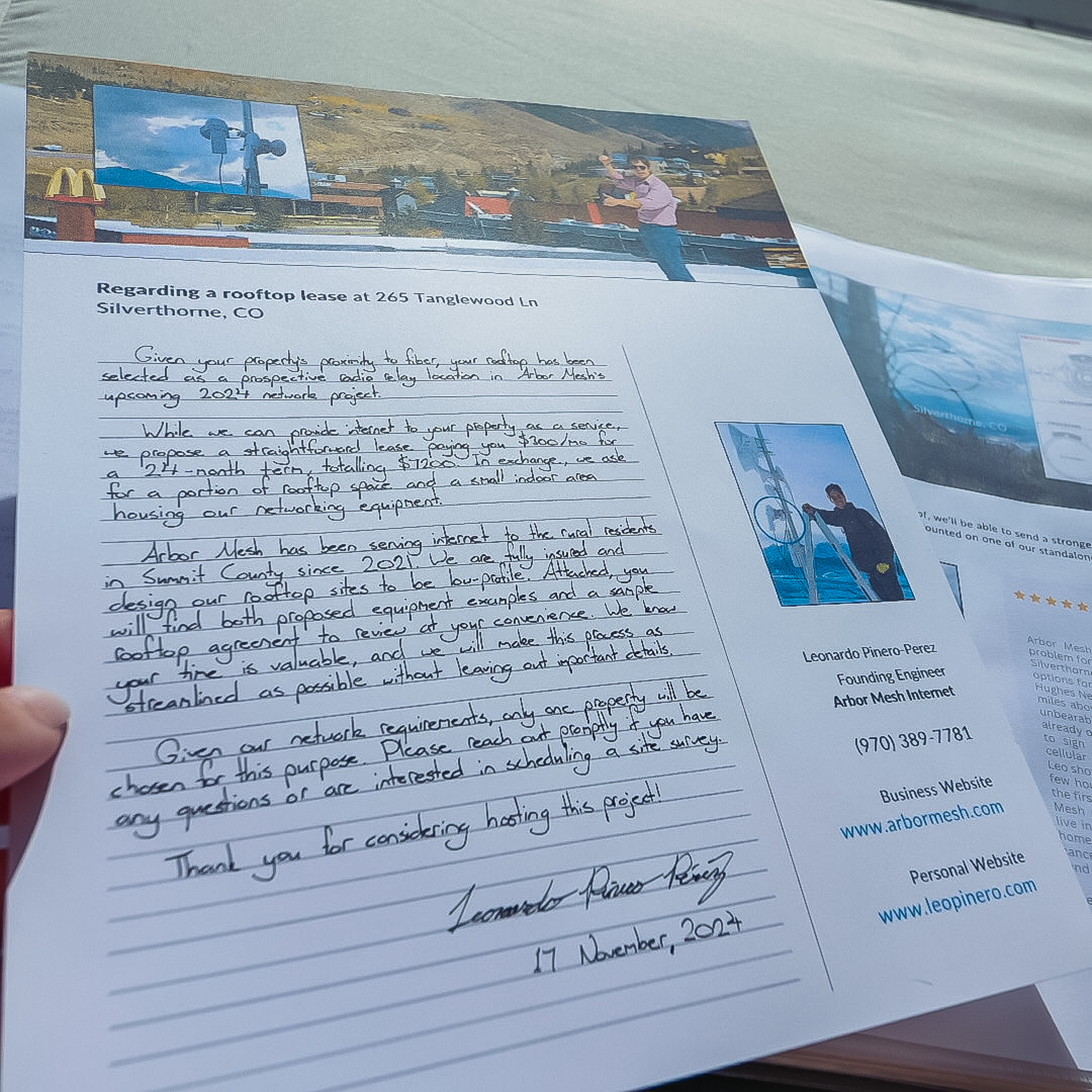
Letters on business card stock inside gray envelopes with vellum address labels. Long-form copy that respected the reader's intelligence. Font sizes easy on older eyes. The kind of piece you'd pick up and want to open before you knew what was inside.
Every detail was intentional. The mail needed to communicate a specific promise: Arbor Mesh would mount a dish on the house and not damage a thing. They could handle the demands of a family and Airbnb guests simultaneously. They belonged in this neighborhood.
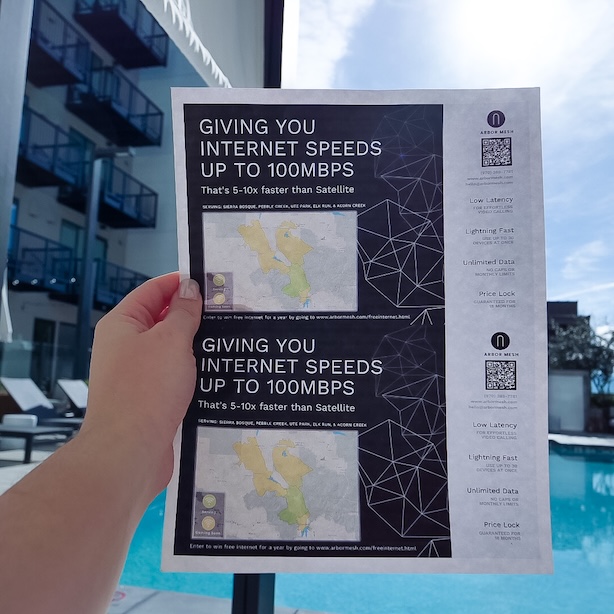
Hannah initiated a 5-part direct mail campaign to a sample neighborhood. Customers signed up within one week. Every single one mentioned the letter without being prompted. Ten out of 30 recipients converted at under $15 per customer in materials.
Those results validated everything she'd learned writing e-commerce copy while living out of a backpack in Europe - specifically, direct response copywriting frameworks. Problem. Agitate. Solve. Applied to a physical piece of mail heavy enough to feel like it mattered.

The Referral Engine
Next, Hannah built a referral program.
Simple structure: both the existing customer and the new signup got a free month of internet. Because the incentive required new customers to name their referrer, attribution was built in from day one.
Word-of-mouth conversion jumped from 10% to 25%.
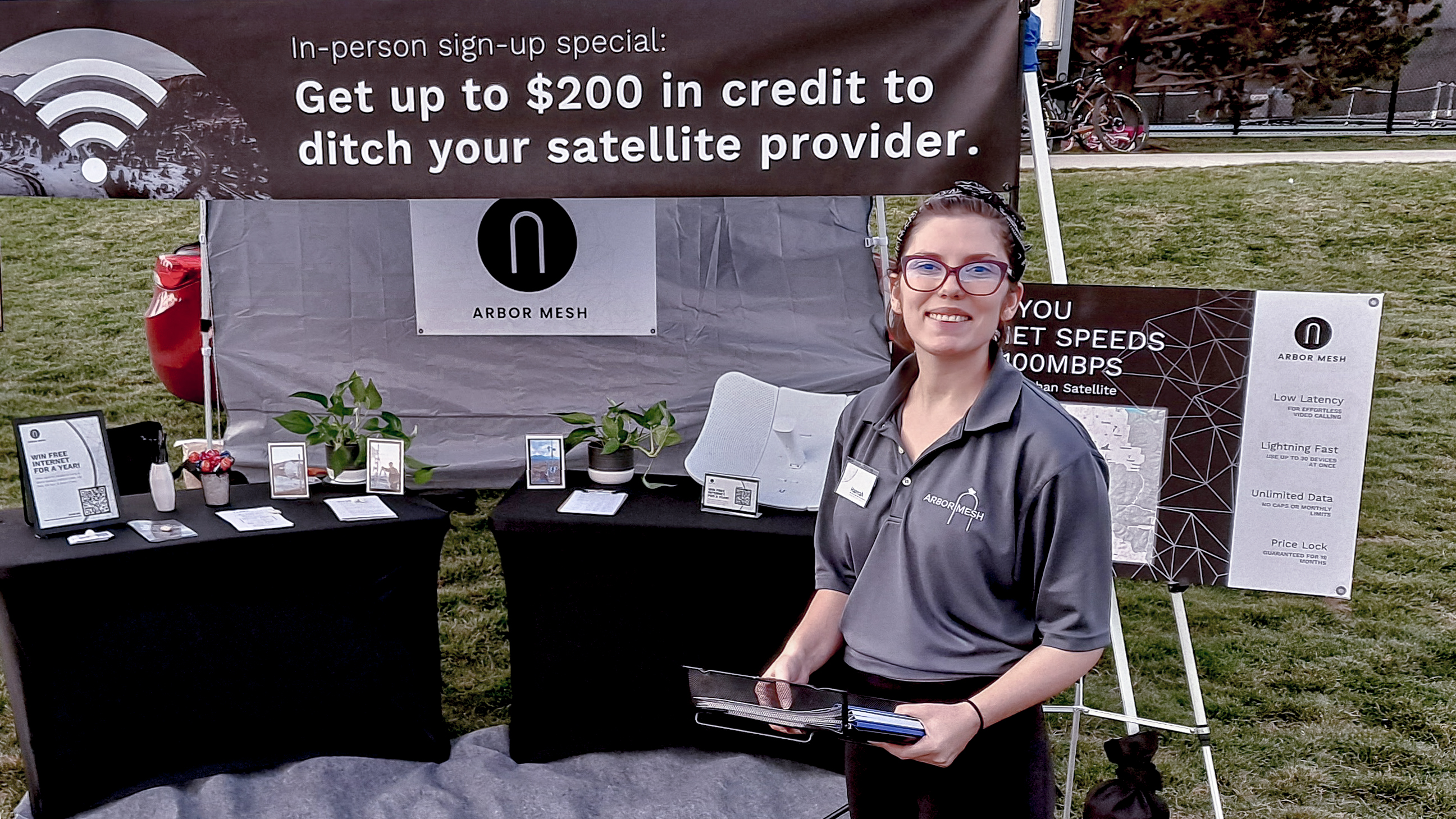
At $95 per month (the second homeowner plan), that's $190 per referral acquisition - one free month to each party, zero ad spend. The industry average customer acquisition cost for residential ISPs runs $300 - $600. Hannah's program was acquiring customers at 37 - 68% below industry average through a system that cost nothing to run.
Securing the Grants
Arbor Mesh won two grants through Colorado's Broadband Deployment Board under the High Cost Support Mechanism.
The board saw professional reporting - drone footage, educational videos, photography - and saw a company that took its commitments seriously. That relationship led to a dedicated customer outreach line item in the grant budget for the first time, beginning in Q2 2026.
Setting the stage before the engineering details mattered.
Part of Hannah's role was preparing rooms for the founder where technical knowledge alone wasn't enough. Local governments. Property owners negotiating leases. The broadband board itself.
These conversations needed someone who could establish trust and credibility before the pitch. Hannah would go in first, frame the vision, and step back so the founder's expertise could land once the relationship was warm.
Where Arbor Mesh Stands Now
The founder took a role at Google. Hannah moved to California and is working remotely. The network is stable, the brand converts, and she is transitioning marketing to a local contact in Silverthorne.
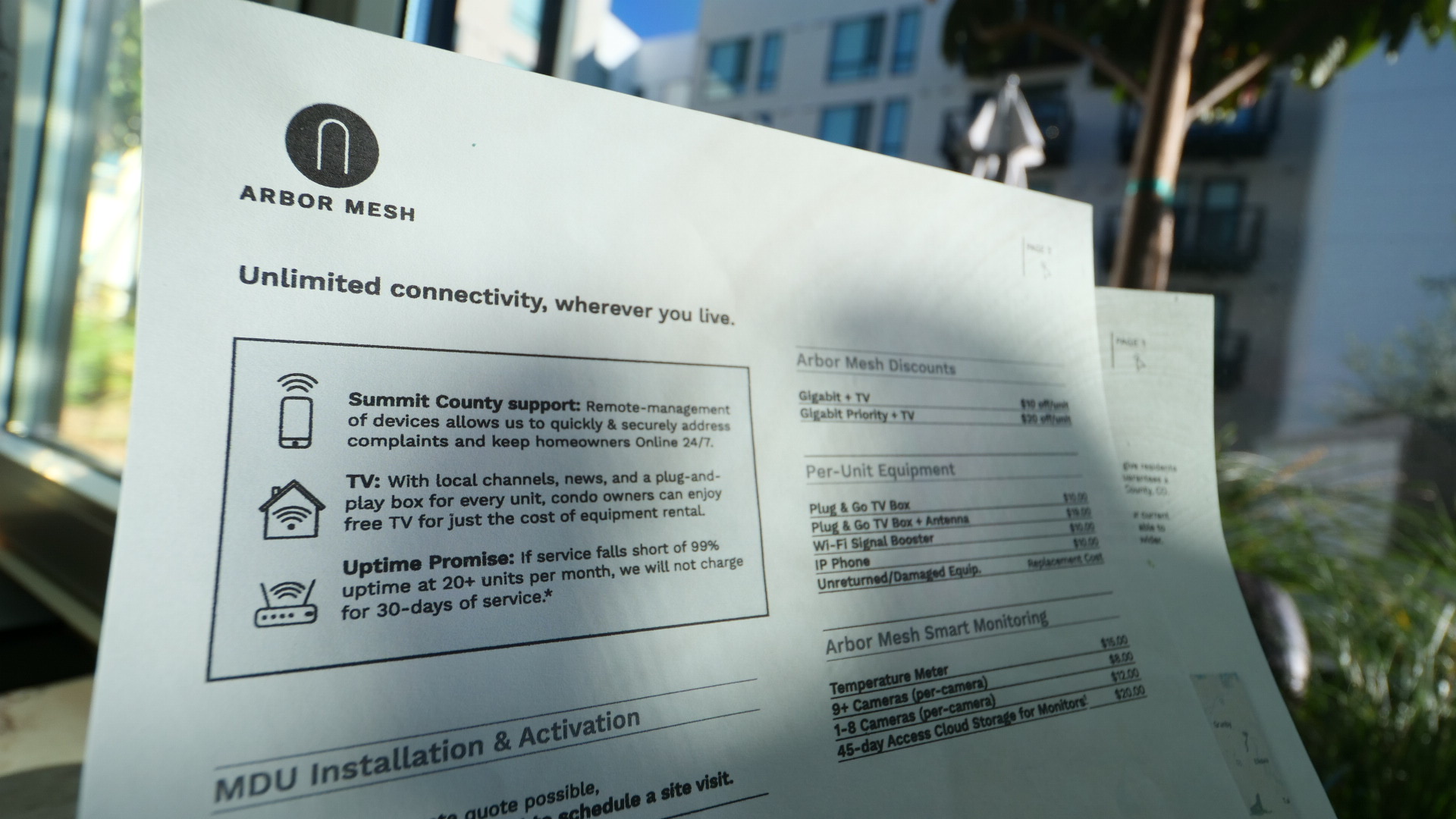
The company is expanding into VOIP phone service based on customer demand, with TV and multi-dwelling unit market entry on the roadmap.
What started as 168 unserved households and a half-built network is now a stable, expanding ISP with a brand that sells itself.